

Artificial intelligence is rapidly reshaping how HR functions operate. For small and medium sized businesses in particular, the appeal is obvious. AI promises speed, efficiency and access to insights that once required large in house teams or expensive systems. Used well, it can remove friction from everyday HR activity and free up valuable time.
But while AI is a powerful enabler, it is not a replacement for human judgement. The most effective HR models do not choose between technology and people. They combine both, using AI to support experienced human expertise rather than replace it.
What AI Does Well in HR
AI is particularly effective when dealing with high volume, data driven tasks. These are often the areas that consume time without necessarily adding strategic value, especially for SMEs with limited internal resource.
In practice, AI can support HR teams by streamlining recruitment activity such as CV screening, candidate matching and interview scheduling. It can provide interview insights by identifying patterns in responses, language or skills alignment. It can also produce real time reporting on workforce data, recruitment pipelines and absence trends.
Beyond recruitment, AI is useful for spotting emerging risks or skills gaps, flagging potential compliance issues and handling repetitive administrative tasks. For smaller businesses, these capabilities can feel transformative, creating structure and visibility where previously there was little.
Where AI Has Clear Limits
Despite its strengths, AI has important limitations, particularly in people centered environments. One of the biggest risks is over reliance on data that may be incomplete, outdated or biased. AI tools can only work with the information they are given, and if that information reflects existing inequalities or flawed assumptions, the output will too.
There are also significant legal and compliance considerations. Poorly implemented tools can create GDPR risks or lead to decisions that are not aligned with current employment law. Without proper oversight, SMEs may not realise where accountability sits or how decisions have been reached.
Crucially, AI does not have human judgement, empathy or cultural awareness. It cannot read the room, understand nuance or respond appropriately to sensitive situations. This matters because HR decisions often involve emotion, context and trust.
Employee confidence is another factor. If AI is introduced without transparency or human involvement, trust can quickly erode. And there is also the simple reality that large language models can be wrong. Confident sounding output does not always equal accurate or lawful guidance. Without experienced interpretation, misinformation can easily slip into decision making.
A Real World Example: When AI Output Creates Risk
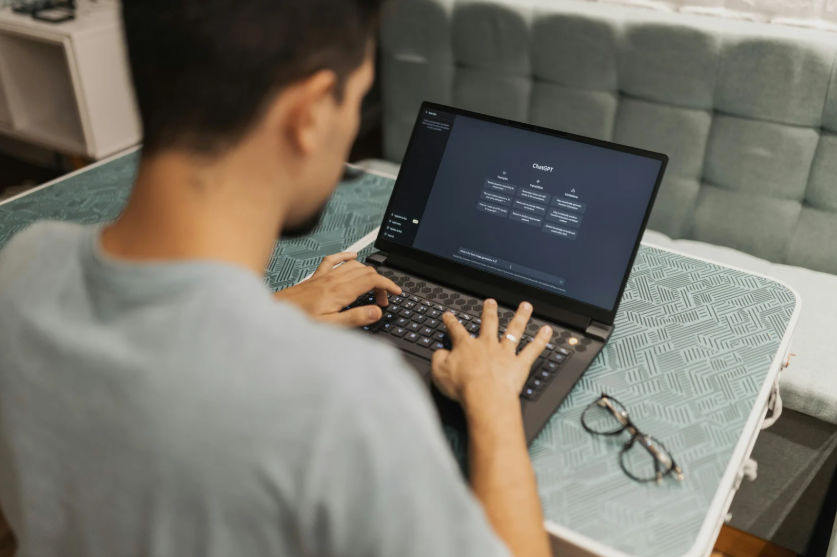
Last week I had a call from a new client that brought this to life in a very practical way. They had invited an employee to a disciplinary hearing using a letter generated by ChatGPT. When the employer read it out to me, I could not clearly tell what the meeting was actually about, and if I could not understand it, the employee certainly would not have been able to.
ChatGPT had taken the prompt and produced something that sounded formal, supportive and polished. That is exactly what it is designed to do. It takes your input, mirrors your tone, and gives you something that feels reassuring. The problem is that a disciplinary process is not about sounding reassuring. It is about clarity, fairness and legal accuracy.
The letter did not properly set out that the meeting was a disciplinary hearing, and it missed key language that should be included so the employee understands the purpose of the meeting, what is being considered, and what the possible outcomes could be. That is not just a technical issue. It goes to the heart of procedural fairness. If the process is challenged later, that kind of failure can undermine the whole case.
The same client also told me they were using ChatGPT for what they described as their policies. In reality, what they had was a one page Code of Conduct. A Code of Conduct can be a useful document, but it is not a substitute for a proper set of policies and procedures. Without clear processes for disciplinary, grievance, absence, capability, and other common issues, managers will fill the gaps with guesswork, and that is where risk grows quietly.
Privacy, Prompts, and the Myth of “ChatGPT Will Sort It”
There is another point that often gets missed in the rush to save time. If you are using free tools, you should assume what you type in is not private in the way a confidential HR conversation is private. Even where providers offer business plans with stronger controls, you still need to think carefully about what you are inputting, particularly if it includes personal data, sensitive context, or anything that could identify an employee. HR is not just admin. It is a compliance area, and confidentiality is part of the job.
Then there is the issue of prompts. AI output is only as good as the input and the judgement behind it. If you do not understand employment law and you do not understand the process you are trying to follow, the tool cannot fix that for you. It will not pause and say, “Before we write this letter, have we established whether this is misconduct or capability, whether an investigation is needed, whether suspension is appropriate, whether the employee has the right to be accompanied, and what timescales are reasonable?” It will simply generate something that sounds plausible.
And if things escalate, a tribunal defence will not be “we used ChatGPT”. Judges will not care. The responsibility sits with the employer. You are expected to follow a fair process, apply the law properly, and treat people reasonably. Technology does not change that accountability.

The Human Touch: Why HR Consultants Still Matter
This is where experienced HR professionals continue to play a critical role. Human expertise provides the judgement, accountability and ethical oversight that technology cannot.
HR consultants ensure that policies and documents are legally compliant and kept up to date with evolving employment legislation. They support managers through performance issues, conflict and absence in a way that balances fairness with commercial reality. They handle sensitive conversations around wellbeing, conduct and capability with empathy and professionalism.
They also play a key role in onboarding, leadership support and career development discussions, areas where trust and understanding are essential. Importantly, human professionals interpret AI generated insights and translate them into practical, lawful action. AI may highlight patterns or risks, but it is people who decide what those insights mean and how to respond appropriately.
A Balanced Approach
AI should support HR decision making, not replace it. When used thoughtfully, it can improve efficiency, consistency and visibility. But without experienced human judgement guiding its use, it can just as easily create risk.
For SMEs, the strongest outcomes come from balance. Technology provides the tools, human expertise provides the judgement. Together, they allow businesses to innovate while maintaining empathy, ethics and trust, the foundations of effective people management.